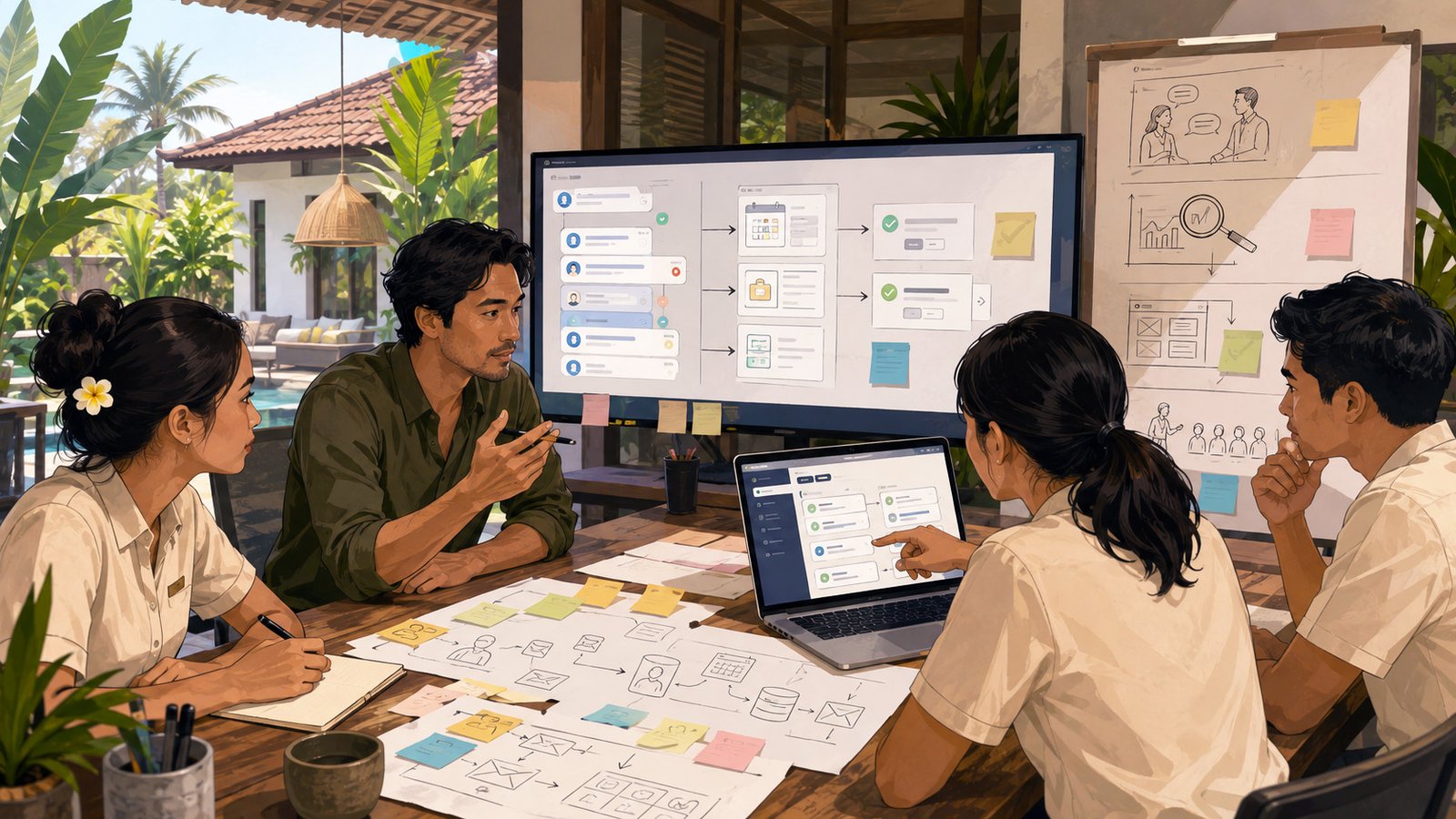
A villa manager in Canggu once told me she’d already sat through three “AI transformation” pitches before she called me. Each one started with a slide about the future of AI. None of them asked her a single question about how her reservations actually got confirmed, or why her front-desk team kept re-entering the same guest details three times a day.
Welcome to WordPress. This is your first post. Edit or delete it, then start writing! Welcome to WordPress. This is your first post. Edit or delete it, then start writing! Welcome to WordPress. This is your first post. Edit or delete it, then start writing! Welcome to WordPress. This is your first post. Edit or delete it, then start writing! Welcome to WordPress. This is your first post. Edit or delete it, then start writing! Welcome to WordPress. This is your first post. Edit or delete it, then start writing!
That’s usually the real question behind “how do I work with an AI consultant in Bali” — not who’s available, but will this person actually understand my business, or just sell me a package? Here’s a straight answer, without the sales language.
What This Actually Looks Like
Working with an AI consultant here should look less like buying software and more like hiring someone to sit inside your operation for a while.
A good AI engagement starts with a workflow, not a demo.
In practice, that means the first conversation isn’t about AI at all. It’s about your business — what’s slow, what’s repetitive, what your team complains about weekly. Only after that does the conversation turn to whether AI is even the right tool, or whether the real fix is a process change that costs nothing.
In Practice: What the First Conversation Covers
- A walk-through of one real workflow — not your whole business, one specific bottleneck.
- Who actually does the work today, and what they’d change if they could.
- What “better” would look like in three months, in plain terms you’d recognize.
- An honest read on whether AI helps here at all, before any tool gets mentioned.
A Typical Engagement, Stage by Stage
Most engagements follow the same shape, whether the client is a DMC, a villa group, or a professional services firm:
- Understand the work. Time is spent on the actual process — bottlenecks, decisions, and what customers expect — before anything is proposed.
- Find the leverage. Not every workflow is worth automating. The ones with real leverage are picked, and the rest are left alone.
- Build and test. A working version is built and tried against real cases — real guest messages, real bookings — not a generic demo.
- Enable adoption. The team is walked through it, given room to push back, and shown how to adjust it themselves over time.
The build is usually the fastest part. Getting a team to actually use it is where most projects quietly fail.
That last stage is the one most outside consultants skip, and it’s the one that decides whether the work sticks after the invoice is paid.
What Determines Whether It’s a Good Fit
Not every business is ready for the same kind of engagement, and that’s fine — it just changes where you start.
In Practice: Signs You’re Ready to Start
- You can name one specific workflow that’s slow or repetitive, not just a vague sense that “we should be doing more with AI.”
- Someone on your team has the time to be involved in testing — this isn’t something that works dropped on people with zero bandwidth.
- You’re open to the answer being “not yet” — sometimes the honest recommendation is to fix a process first.
Exact scope and cost depend on the workflow, the team size, and how much building versus training is involved — that’s worked out in the first conversation rather than quoted blind, since a generic number wouldn’t be honest.
Frequently Asked Questions
Do I need to already know what AI tool I want? No. Most clients start with a problem, not a tool. Part of the first conversation is figuring out whether AI is even the right answer.
Is this only for tourism and hospitality businesses? No — the work is grounded in tourism and hospitality experience, but the same approach applies to professional services, marketing teams, and other SMEs.
How long does a typical project take? It depends on scope, but most engagements move from first conversation to a working, tested system in weeks rather than months — team enablement is usually the longest stage.
What if we try it and it doesn’t work? That’s exactly why testing happens against real cases before full rollout. If something isn’t working, it gets adjusted or dropped before it’s built into daily use.
Do you work with businesses outside Bali? Yes, though the operator’s-eye view of tourism and hospitality is rooted in direct experience running businesses here.
What’s the first step if I want to talk? A short initial conversation — no slide deck, just a conversation about what’s actually slowing your team down.
Final Thoughts
The villa manager from Canggu ended up automating one thing first: a guest-message triage system that cut her front desk’s repeat data-entry in half. It wasn’t glamorous, and it wasn’t what the earlier pitches had proposed. It was just the thing that was actually broken.
That’s usually where the real value is — not in the biggest idea, but in the one your team already knows is a problem. If that sounds like where you are, the next step is simple: book an initial conversation and tell me what’s slowing your team down.
Last update: July 24th, 2026